
Therapy Options for ADHD: What Actually Works?
Having ADHD can be challenging, affecting everything from everyday tasks to how you interact with others, impacting your daily functioning. It's not uncommon to look for ways to help manage these challenges. Fortunately, there are several approaches, often called therapy for ADHD, that can make a real difference. These methods aim to equip you with practical skills and strategies that actually work to help you navigate life more smoothly.
Key Takeaways
Various types of therapy for ADHD exist, including Cognitive Behavioral Therapy (CBT), Dialectical Behavior Therapy (DBT), and ADHD coaching, each offering unique strategies to manage symptoms.
Parent training and family therapy are particularly effective for children with ADHD, providing parents and caregivers with tools to support their child's development and behavior.
Combining therapy for ADHD with medication, when appropriate, can offer a more complete approach to managing symptoms and improving overall quality of life.

Understanding ADHD and Its Impact
What is ADHD?
Attention-Deficit/Hyperactivity Disorder, or ADHD, is a neurodevelopmental condition that affects how you process information, manage your attention, and control impulses. It's not something that just appears in childhood; it can continue into adolescence and adulthood. While the exact causes are still being explored, research points to a mix of genetic, neurological, and environmental factors. Think of it as a difference in brain wiring, particularly in areas that manage executive functions like planning, focus, and self-control. It's estimated that ADHD affects a notable percentage of both children and adults worldwide. Effective ADHD treatment often involves a combination of strategies that can help manage symptoms and improve overall quality of life. The specific approach is usually tailored to the individual's needs and the severity of their symptoms.
There are generally three ways ADHD can present itself:
Predominantly Inattentive Presentation: You might find yourself easily distracted, have trouble following instructions, lose things often, or struggle to organize tasks. It's not about not paying attention, but rather about the difficulty in sustaining it.
Predominantly Hyperactive-Impulsive Presentation: This often involves feeling restless, fidgeting a lot, having trouble sitting still, talking excessively, or acting without thinking through the consequences.
Combined Presentation: This is when symptoms of both inattention and hyperactivity-impulsivity are present to a significant degree.
It's important to remember that ADHD is a spectrum, and how it shows up can vary greatly from person to person. The key is understanding that these are not character flaws, but rather differences in how your brain operates.
Common Challenges Faced by Individuals with ADHD
Living with ADHD can bring about a unique set of challenges that touch many areas of life. You might find that day-to-day tasks feel more demanding. For instance, keeping track of appointments, managing household chores, or even just staying focused during a conversation can require extra effort.
Here are some common areas where individuals with ADHD might experience difficulties:
Academics and Work: Difficulty concentrating in class or during meetings, trouble completing assignments on time, and challenges with organization can impact educational and career progress. This can sometimes lead to lower educational attainment than one's potential.
Relationships: Impulsivity or inattention can sometimes strain relationships with family, friends, or partners. Misunderstandings can arise if others don't grasp the nature of ADHD.
Emotional Regulation: Many individuals with ADHD also experience challenges with managing emotions, leading to frustration, irritability, or mood swings.
Self-Esteem: Persistent struggles can sometimes lead to feelings of inadequacy or low self-worth, especially if ADHD has been misunderstood or mismanaged.
Daily Living: Simple tasks like managing finances, maintaining a schedule, or remembering to take medication can become significant hurdles.
It's common for individuals with ADHD to also experience other conditions, such as anxiety or depression. These can sometimes be a result of the ongoing stress of managing ADHD symptoms or a separate co-occurring condition. Recognizing these connections is a vital part of getting the right support.
These challenges are not insurmountable. With the right strategies and support, you can learn to manage them effectively and lead a fulfilling life.
Evidence-Based Therapy Approaches for ADHD
When you're looking for ways to manage ADHD, it's good to know there are therapies that have solid research behind them. These aren't just random ideas; they're methods that have been studied and shown to help people with ADHD. Think of them as tools in your toolbox for handling the challenges that come with ADHD.
Cognitive Behavioral Therapy (CBT) for ADHD
Cognitive Behavioral Therapy, or CBT, is a really common and effective approach. It helps you look at your thoughts and behaviors. The idea is that by changing unhelpful thinking patterns, you can also change how you act and feel. For ADHD, this often means learning to manage things like procrastination, disorganization, and impulsivity. You'll work with a therapist to identify specific problems and then develop strategies to tackle them. CBT teaches practical skills for everyday life. It's about making small, manageable changes that can add up over time.
Dialectical Behavior Therapy (DBT) for ADHD
Dialectical Behavior Therapy, or DBT, is another therapy that can be quite helpful, especially if you struggle with intense emotions or impulsivity. It builds on CBT but adds a focus on mindfulness, distress tolerance, emotional regulation, and interpersonal effectiveness. You learn to accept difficult emotions without letting them take over, and you develop ways to cope with stress in a healthier manner. It's about finding a balance between accepting yourself as you are and working towards positive change.
ADHD Coaching
ADHD coaching is a bit different from traditional therapy. A coach works with you to set specific goals related to your ADHD, like improving time management, organization, or productivity. They help you break down big tasks into smaller steps and provide accountability. Coaches often focus on practical strategies and skill-building, helping you create systems that work for your unique brain. It's a very action-oriented approach.
Parent Training and Family Therapy
For younger individuals with ADHD, parent training is incredibly important. This therapy focuses on teaching parents effective strategies for managing their child's behavior. It involves learning about ADHD, understanding behavior patterns, and implementing consistent reward systems. Family therapy can also be beneficial, helping the whole family understand ADHD and how it affects each member. It creates a more supportive home environment and improves communication.
It's important to remember that the goal of these therapies is not to 'cure' ADHD, but to provide you with the skills and strategies to manage its symptoms effectively and live a more fulfilling life.
Choosing the Right Therapy for You
Deciding on the best therapy approach for ADHD can feel like a big step, and it is. It's about finding what clicks for you, what helps you manage things day-to-day. Think of it as picking the right tools for a project; you want ones that fit the job and your hand.
Factors to Consider When Selecting a Therapist
When you're looking for a therapist, there are a few things to keep in mind. It's not just about finding a therapist, but finding the right therapist for your specific needs and personality. Here’s a breakdown of what to think about:
Your Specific Challenges: What are the main things you want to work on? Is it managing your time, improving relationships, handling emotions, or something else? Different therapies focus on different areas. For example, if relationship conflicts are a big issue, interpersonal therapy might be a good fit. If emotional regulation is the main concern, something like Dialectical Behavior Therapy (DBT) could be more helpful.
Therapist's Experience: Look for a therapist who has experience working with adults with ADHD. They'll understand the unique challenges and nuances that come with it. Don't hesitate to ask about their training and experience with ADHD specifically.
Therapeutic Approach: As we've discussed, there are various approaches like CBT, DBT, coaching, and more. Consider which approach seems most aligned with your goals and how you learn best. Some people prefer structured, goal-oriented sessions, while others might benefit from a more exploratory style.
Your Comfort Level: This is huge. You need to feel comfortable and safe with your therapist. It's okay to have a consultation or a first session and decide if it feels like a good match. Building a trusting relationship with your therapist is key to making progress.
Logistics: Think about practicalities like session frequency, location (in-person or virtual), and cost. Make sure the arrangement works with your schedule and budget.
The Role of Medication in Conjunction with Therapy
Medication can be a really helpful part of managing ADHD for many people. It can help with focus, impulsivity, and other core symptoms. However, it's not always a complete solution on its own. Sometimes, medication helps to stabilize things enough so that therapy can be more effective. Think of it this way: medication might help clear the fog, making it easier for you to engage with and benefit from the strategies and insights you gain in therapy.
Many individuals find that a combination approach works best. Therapy can teach you skills and coping mechanisms that medication alone can't provide. These might include organizational strategies, emotional regulation techniques, or ways to improve communication. When used together, medication and therapy can create a more robust plan for managing ADHD symptoms and improving your overall quality of life.
It's important to remember that seeking help, whether through medication, therapy, or both, is a sign of strength. It shows you're taking proactive steps to understand yourself better and to build a life that works for you.
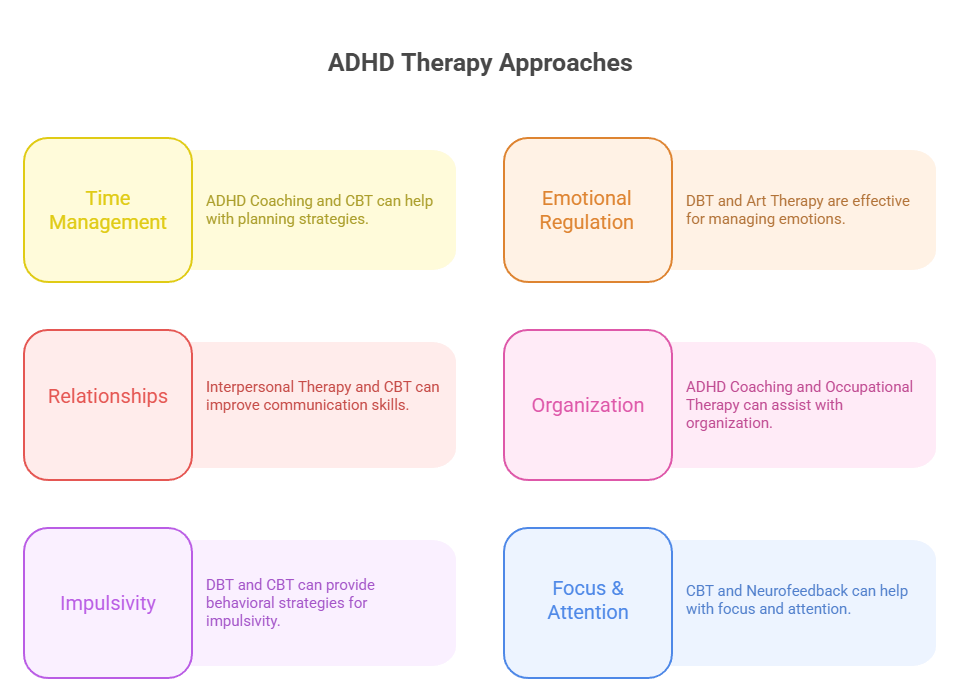
Here's a quick look at how different approaches might align with common ADHD challenges:
Living Successfully with ADHD
It's completely understandable to feel like you're constantly trying to keep up when you have ADHD. The good news is that managing ADHD isn't just about treatment plans; it's also about building a life that works for you. Think of it as designing your own environment and routines to play to your strengths.
Many people find that combining therapy with other strategies makes a big difference. It's not about fixing something that's broken, but rather about learning new ways to handle challenges and make the most of your abilities. This journey is about growth and self-discovery.
Here are some ways to approach living successfully with ADHD:
Develop practical skills: Therapy and coaching can help you learn concrete strategies for organization, time management, and task completion. This might involve breaking down big projects into smaller steps or finding systems that help you stay on track.
Build stronger relationships: If interpersonal challenges are a concern, therapies like Interpersonal Therapy can help you understand how ADHD behaviors might affect your interactions and how to communicate more effectively.
Manage your energy and focus: Techniques learned in therapy can help you understand your attention patterns and develop ways to optimize your focus, whether through structured work periods or mindful breaks.
Cultivate self-compassion: It's easy to be hard on yourself when things don't go as planned. Learning to be kinder to yourself is a significant part of living well with ADHD.
Remember, seeking support is a sign of strength. It shows you're committed to creating a life where you can thrive, not just survive. The skills and insights you gain are tools for building the future you want.
Consider exploring different types of support, like ADHD coaching or even support groups. Connecting with others who understand your experiences can be incredibly validating and provide practical advice. Ultimately, success with ADHD is about finding what works best for your unique brain and building a life that feels fulfilling and manageable.
Moving Forward with Your ADHD Management Plan
So, we've looked at a bunch of ways to handle ADHD, beyond just medication. It's clear that different things work for different people, and often, a mix of approaches is best. Whether you're drawn to therapy like CBT, coaching, or even support groups, the main thing is finding what clicks for you. Remember, figuring out what helps you manage your ADHD is a journey, and it's totally okay to try different things until you find your stride. Taking these steps to build skills and find support is a really strong move towards living a more organized and fulfilling life. Don't hesitate to explore resources and connect with others who understand – you're not alone in this.