
ADHD and relationships: common challenges and solutions
Relationships are a big part of life, bringing connection and support. Sometimes, though, things can get tricky, especially when Attention-Deficit/Hyperactivity Disorder (ADHD) is part of the picture. For everyone involved, the journey of love and partnership can have its own set of bumps. Misunderstandings might pop up, but with the right approach and a good dose of patience, these hurdles can actually lead to a stronger, more understanding connection. This guide looks at how ADHD can affect relationships and offers simple ways to handle common issues. It's for anyone with ADHD and needs ADHD support or loves someone who does.

Key Takeaways
ADHD common challenges in relationships often stem from communication issues, emotional regulation, time management, forgetfulness, and impulsivity. Recognizing these patterns is the first step.
Open communication, where both partners express feelings using 'I' statements and actively listen, is vital. Creating a calm space for discussions helps immensely.
Building a strong relationship with ADHD involves teamwork, empathy, and seeking professional guidance when needed. Focusing on strengths and understanding the 'why' behind behaviors can transform challenges into opportunities for growth.
Understanding ADHD's Impact on Relationships
ADHD often leaves a noticeable mark on romantic relationships, friendships, and family connections. If you or your partner has ADHD, it’s not just about being “a little forgetful” or “easily distracted” — the way you interact with each other can shift in ways you might not expect. ADHD symptoms directly affect daily routines, emotional responses, and how both sides feel heard and supported.
Think of ADHD as something that shapes communication patterns, emotional currents, and even how chores or social commitments get handled. You might notice certain moments repeat:
One person feels ignored when conversations get interrupted or forgotten.
Tasks and plans slip through the cracks, sparking frustration or blame.
Emotional reactions sometimes seem stronger, faster, or more unpredictable than in other relationships.
One partner might start to shoulder more day-to-day responsibilities, which can create resentment over time.
Here’s a simple chart of how ADHD can play out in relationships:
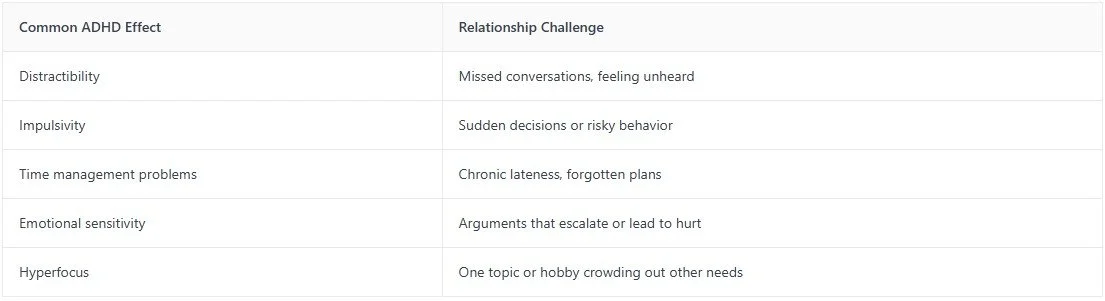
You might find yourself wondering why your partner constantly forgets plans or why you both keep having the same argument about chores and timelines. It isn’t about trying harder—it's often about different brain wiring. Understanding the source makes it easier to adjust expectations and talk openly about your needs.
Remember, these challenges do not mean your relationship is doomed. With patience and a bit of self-awareness, you both can turn these struggles into a chance to learn more about each other and create stronger, more honest connections.
Common Challenges in Relationships with ADHD
When Attention-Deficit/Hyperactivity Disorder (ADHD) is part of a relationship dynamic, it can introduce some unique hurdles. It's not about blame or fault; it's about understanding how ADHD affects daily life and interactions. For both partners, recognizing these patterns is the first step toward finding ways to work through them together.
Communication Breakdowns
Conversations can sometimes feel like a bumpy road. The person with ADHD might find it hard to stay focused on what's being said, leading to unintentional interruptions or a tendency to drift off. This isn't a sign of disinterest, but rather how their brain processes information. Your partner might feel unheard or like their thoughts aren't landing, while you might struggle to express yourself clearly or feel frustrated by the conversational flow. It can be tough when one person feels like they're talking to a wall, even if that's not the intention.
Emotional Regulation Difficulties
Emotions can sometimes feel like a rollercoaster. People with ADHD may experience emotions more intensely, leading to quick shifts in mood, heightened sensitivity, or strong reactions. This can be confusing for a partner who might misinterpret these intense feelings or feel overwhelmed by them. It's important to remember that these reactions are often part of the ADHD experience, not necessarily a reflection of their feelings towards you.
Time Management and Punctuality Issues
The perception of time can be quite different for individuals with ADHD. This "time blindness" can lead to frequent lateness, missed appointments, or a struggle to estimate how long tasks will take. For a partner who values punctuality or relies on timely completion of tasks, this can be a significant source of frustration. It can feel like a lack of respect or reliability, even when the intention is not to cause inconvenience.
Forgetfulness and Inattention
It's common for individuals with ADHD to struggle with remembering details, appointments, or promises. This isn't a sign of not caring; it's often a symptom of executive function challenges. You might forget to pick up groceries, miss an important date, or forget a promise made. For your partner, this can lead to feelings of being unimportant or burdened with remembering everything.
Impulsivity and Risk-Taking
Impulsive actions or decisions can sometimes create unexpected challenges. This might manifest as sudden purchases, hasty decisions, or engaging in activities without fully considering the consequences. While sometimes these impulses lead to fun adventures, other times they can create financial strain or interpersonal conflict.
Hyperfocus and Neglecting Other Areas
While inattention is common, ADHD also involves hyperfocus – an intense, almost tunnel-vision-like concentration on a specific interest. While this can be a superpower for certain tasks, it can also lead to neglecting other important areas of life, including relationships, household chores, or personal well-being. Your partner might feel ignored when you're deeply engrossed in a project, even if you don't intend to shut them out.
Navigating these challenges requires patience and a willingness from both partners to learn and adapt. It's about building bridges of understanding, not assigning blame. Seeking out resources and support, like those found in adhd support communities, can make a significant difference.
Strategies for Navigating ADHD Challenges in Relationships
Building a strong and supportive relationship when ADHD is part of the dynamic involves intentional effort and a willingness to learn from both partners. It's about creating a partnership where both individuals feel understood and valued. Remember, the goal isn't to change who your partner is, but to develop ways of interacting that honor both of your needs.
Open and Honest Communication
Effective communication is the bedrock of any healthy relationship, and it's especially important when navigating ADHD. For the partner with ADHD, learning to pause before reacting can make a significant difference. If a conversation feels overwhelming, it's perfectly acceptable to say something like, "Can you give me a moment to think about that?" Sometimes, jotting down your thoughts before a serious talk can help you stay focused and articulate your points clearly. For the partner without ADHD, using "I" statements can help express feelings without placing blame. For instance, saying "I feel unheard when I'm interrupted" is often more constructive than "You always cut me off." Creating a calm environment, free from distractions, can also make important conversations more productive.
Developing Coping Mechanisms and Support Systems
Living with ADHD often means developing practical strategies to manage daily life. This can include using shared digital calendars with reminders for appointments and important dates, which can help with time management and reduce the likelihood of missed events. It can also be helpful to establish consistent times for checking in with each other about schedules and responsibilities. Dividing household tasks based on individual strengths and preferences can also ease the burden. For example, if one partner is great at creative problem-solving and the other excels at detailed tasks, lean into those strengths. It's also vital to remember that ADHD-related behaviors are usually not a reflection of a person's character or their love for you. Educating yourselves about ADHD together can build compassion and reduce misunderstandings. Framing challenges as something you are tackling as a team, rather than as one person's "fault," can strengthen your bond. Acknowledging and appreciating each other's efforts, even when things aren't perfect, goes a long way.
It's important to approach these challenges with empathy and assume good intentions. Often, behaviors that cause friction are not deliberate but are a result of how ADHD affects executive functions. Understanding this can shift the dynamic from frustration to collaboration.
Seeking Professional Help and Resources
Sometimes, external support can provide invaluable tools and perspectives. Psychotherapy, particularly couples counseling with a therapist who understands neurodiversity, can offer a neutral space to improve communication and develop tailored strategies. Therapists can help both partners understand the impact of ADHD on the relationship and provide practical techniques for managing common challenges. Exploring resources like books, articles, and support groups specifically for partners of individuals with ADHD can also provide a sense of community and shared experience. Remember, seeking help is a sign of strength and a commitment to nurturing your relationship.
Moving Forward Together
Navigating a relationship when ADHD is part of the picture is definitely a journey, not a destination. It takes effort from both sides, a lot of patience, and a willingness to really listen to each other. By learning more about how ADHD shows up and using some of the strategies we've talked about, you can move past the misunderstandings. You can build a connection that's not just strong, but also richer because of your unique experiences. Remember, working together and showing empathy can make all the difference.