
Anxiety Tests for Teens & Young Adults
Feeling anxious as a teen or young adult is more common than you might think. With school, relationships, and future pressures, it can sometimes be hard to tell whether what you're experiencing is normal stress or something more serious. Anxiety tests can help provide clarity, giving you a better understanding of your symptoms and whether it might be time to seek extra support.
Key Takeaways
Anxiety tests for teens can help identify if you're experiencing more than just everyday stress.
These tests can be a first step in understanding your symptoms and seeking professional help.
Various types of screenings and interviews are available to assess anxiety in young people.
Understanding Anxiety in Teens and Young Adults

What is Anxiety?
It's completely normal to feel worried or nervous sometimes. Life throws curveballs, and a little bit of anxiety can actually be helpful – it might make you more alert or motivate you to prepare for a challenge. But for some young people, these feelings can become overwhelming. Anxiety isn't just a bad mood or a stressful day; it's a persistent feeling of worry, nervousness, or unease that can interfere with daily life. It's like having a constant alarm bell ringing in your head, even when there's no real danger. This can manifest in many ways, from physical sensations like a racing heart or tense muscles to persistent, intrusive thoughts that are hard to shake.
Anxiety disorders are diagnosed when symptoms are excessive, persistent, and significantly interfere with daily functioning.
Common Signs and Symptoms of Anxiety in Young People
Recognizing anxiety in teens and young adults can sometimes be tricky because it can look different from person to person. You might notice changes in behavior, mood, or even physical complaints. Here are some common signs to be aware of:
Excessive Worrying: This goes beyond everyday concerns. It's a constant feeling that something bad might happen, often about things that are unlikely or minor.
Restlessness and Feeling on Edge: A persistent sense of being keyed up, unable to relax, or feeling like you can't sit still.
Irritability: Becoming easily annoyed or snapping at others more than usual.
Difficulty Concentrating: Finding it hard to focus on tasks, schoolwork, or conversations.
Sleep Disturbances: Trouble falling asleep, staying asleep, or experiencing restless sleep.
Physical Symptoms: This can include headaches, stomachaches, nausea, muscle tension, sweating, or a racing heart, especially when there's no clear physical cause.
Avoidance: Staying away from situations, people, or places that trigger anxious feelings.
It's important to remember that experiencing some of these symptoms occasionally doesn't automatically mean someone has an anxiety disorder. However, some symptoms such as fatigue are used as a DSM diagnostic symptom. If these signs are persistent, intense, and start getting in the way of daily activities, school, or relationships, it's a good indication that further attention might be needed.
Why Are Anxiety Tests Important for Teens?
Early Detection and Intervention
Sometimes, it can be tough to tell if what you're experiencing is just a normal part of growing up or something more. Anxiety can sneak in, and before you know it, it's affecting your daily life in ways you might not even realize. Taking an anxiety screening is like getting a check-up for your mental well-being. It's a way to see if there might be something going on that needs a little extra attention. Think of it like this: if you had a persistent cough, you'd probably see a doctor, right? This is similar. An early screening can help identify potential anxiety issues sooner rather than later. This early detection is really key because it opens the door for getting help sooner. When we catch things early, it often means that the path to feeling better can be shorter and more straightforward. It allows us to put strategies in place before things become overwhelming.
Distinguishing Anxiety from Normal Stress
Life as a teen and young adult is full of pressures – school, friendships, family, figuring out your future. It's completely normal to feel stressed or worried sometimes. These feelings are usually temporary and tied to specific events. Anxiety, however, is different. It's often more persistent, more intense, and can sometimes occur without a clear trigger or may be triggered by specific situations. It can feel like a constant hum of worry in the background, or sometimes like a sudden storm. Anxiety tests can help sort this out. They look at the frequency, intensity, and impact of your worries and physical symptoms. For example, a screening might ask about how often you feel restless, have trouble concentrating, or experience physical symptoms like a racing heart or muscle tension. These kinds of questions help differentiate between the everyday ups and downs and a more significant anxiety concern. It's not about saying one is 'good' and the other is 'bad,' but about understanding what you're experiencing so you can get the right kind of support.
Here’s a quick way to think about the difference:
Normal Stress: Usually linked to a specific event (e.g., a big test, a disagreement with a friend). It tends to fade once the event passes. You can usually still function, even if you feel uncomfortable.
Anxiety: Can be ongoing, even without a clear cause. It often feels more intense and can interfere with daily activities like schoolwork, socializing, or even sleeping. It might involve physical symptoms that are more constant or disruptive.
Understanding the difference is the first step toward getting the right kind of help. It's about recognizing when stress is just part of life and when it might be a sign that you need to explore your feelings more deeply with a professional.
Types of Anxiety Tests and Screenings
When you're trying to understand what might be going on with your anxiety, there are a few different ways to get a clearer picture. It's not about a single "test" like you might have for a school subject, but more like a series of tools that can help you and a professional figure things out.
Self-Assessment Questionnaires
These are often the first step for many people. Think of them as guided questionnaires that ask about how you've been feeling over a certain period, usually the past week or two. They're designed to help you notice patterns and specific symptoms you might be experiencing. These tools are great for starting a conversation, not for giving a final diagnosis.
Some common examples you might come across include:
The GAD-7 (Generalized Anxiety Disorder 7-item scale): This is a widely used questionnaire that asks about seven common anxiety symptoms. It helps gauge how often you've been bothered by things like feeling nervous, worrying too much, or trouble relaxing. The scores can give an idea of the severity of anxiety, from minimal to severe.
SCARED (Screen for Child Anxiety Related Emotional Disorders): This is specifically designed for younger individuals and covers various anxiety symptoms, including worries about social situations, physical symptoms, and separation concerns.
It's important to remember that these questionnaires are screening tools. They can point towards the possibility of an anxiety disorder, but they don't replace a professional evaluation. The results can be a helpful starting point when you talk to a doctor or therapist.
Clinical Interviews and Diagnostic Tools
If a self-assessment suggests that anxiety might be a concern, the next step often involves a more in-depth conversation with a mental health professional. This is where clinical interviews come in.
Clinical Interview: This is a conversation with a psychologist, psychiatrist, or licensed therapist. They'll ask detailed questions about your experiences, your history, how these feelings affect your daily life, and any other concerns you might have. They are trained to listen for specific patterns and information that help them understand what's happening.
Diagnostic Tools: Professionals might use structured diagnostic tools or criteria, like those found in the Diagnostic and Statistical Manual of Mental Disorders, Fifth Edition, Text Revision (DSM-5-TR), to help make a formal diagnosis. These are not questionnaires you fill out alone, but rather frameworks that the professional uses during the interview and assessment process.
These clinical assessments are designed to look at the whole picture. They consider not just the symptoms themselves, but also how long they've been present, how much they interfere with your life, and whether other factors might be contributing to how you feel. It's a thorough process aimed at understanding your unique situation.
Using a combination of self-assessment tools and professional evaluation is the most effective way to get a clear understanding of anxiety and to determine the best path forward for support.
What to Expect During an Anxiety Test
When you decide to take a test for anxiety, it's natural to wonder what the process will be like. Think of it less like a formal exam and more like a conversation designed to help us understand what you're experiencing.
Often, the first step involves a questionnaire. These are usually a series of questions about how you've been feeling over a specific period, like the past two weeks. You might be asked to rate how often you've experienced things like excessive worrying, feeling restless, or having trouble relaxing.
Here’s a look at what a common screening tool, the GAD-7, asks about:
Feeling nervous, anxious, or on edge
Not being able to stop or control worrying
Worrying too much about different things
Trouble relaxing
Being so restless that it is hard to sit still
Becoming easily annoyed or irritable
Feeling afraid as if something awful might happen
After you complete a questionnaire, a mental health professional will likely discuss the results with you. This is where the conversation part really comes in. They'll ask follow-up questions to get a clearer picture of your experiences, how long they've been happening, and how they affect your daily life. This isn't about judgment; it's about gathering information to help figure out the best path forward.
The goal of any anxiety screening is to identify patterns of thought and feeling that might be causing distress. It's a way to gather clues that can lead to a better understanding and, ultimately, to effective anxiety treatment.
Sometimes, a professional might use more in-depth diagnostic tools or conduct a clinical interview. This is a more detailed conversation where they explore your history, symptoms, and any potential contributing factors. The aim is always to get an accurate understanding so that appropriate support and anxiety treatment can be recommended. Remember, this is a collaborative process, and your input is key.
Interpreting the Results and Next Steps
So, you've completed an anxiety screening. That's a really positive step towards understanding what's going on. Now, let's talk about what those results might mean and what you can do next.
First off, it's important to remember that these screenings are not a diagnosis. Think of them more like a helpful signpost, pointing towards areas where you might be experiencing more anxiety than usual. They can give you and a professional a starting point for a conversation.
The results from a screening tool will typically give you a score, which can then be categorized. For example, a common screening tool like the GAD-7 might show results like this:
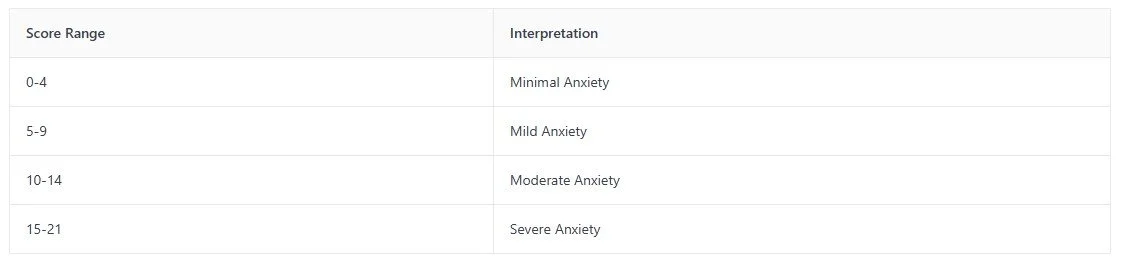
This kind of information helps to frame the conversation. A score in the 'Minimal' range might suggest that while you're feeling some stress, it's not significantly impacting your daily life. Scores in the 'Mild,' 'Moderate,' or 'Severe' ranges indicate that the anxiety symptoms you're experiencing are more pronounced and could be affecting your well-being.
What happens after you get your results? Here are a few things to consider:
Review the specific symptoms: Look back at the questions that contributed most to your score. Were there particular worries or physical sensations that stood out?
Consider the impact: How are these feelings affecting your schoolwork, relationships, sleep, or overall enjoyment of life? Be honest with yourself.
Think about your history: Have you experienced similar feelings before? Have there been significant life changes or stressors recently?
It's completely normal to feel a mix of emotions after reviewing your results, whether they indicate higher levels of anxiety or not. The key is to use this information as a tool for self-awareness and to guide your next actions.
Understanding your treatment options is the next big step. Depending on your results and how you're feeling, this could involve several paths. For some, it might mean learning more about anxiety and developing coping strategies on their own. For others, it will mean seeking professional guidance. This could include talking to a school counselor, a therapist, or a doctor. They can help you explore different types of support, such as therapy (like Cognitive Behavioral Therapy or CBT), medication, or lifestyle adjustments. Remember, taking this step is about finding what works best for you to feel better.
Seeking Professional Help and Support
It's completely understandable to feel unsure about the next steps after learning more about anxiety, especially if you've taken a test or screening. Reaching out for professional help is a sign of strength, and there are many avenues available to support you. You don't have to go through this alone.
When you decide to seek professional support, you'll likely encounter a few different types of help. These can include talking with a therapist or counselor, consulting with a psychiatrist, or working with other mental health professionals. Each plays a unique role in helping you manage anxiety.
Here are some common ways professionals can assist:
Psychotherapy (Talk Therapy): This involves talking with a trained therapist about your thoughts, feelings, and behaviors. Cognitive Behavioral Therapy (CBT) is the most evidence-based therapy for anxiety disorders.
Medication: In some cases, a psychiatrist or medical doctor might suggest medication (such as SSRIs) to help manage anxiety symptoms. This is often used in combination with therapy.
Support Groups: Connecting with others who have similar experiences can be incredibly helpful. These groups offer a safe space to share and learn from one another.
It's important to find a professional who feels like a good fit for you. Think about what you're looking for in a therapist or counselor. Do you prefer someone who is more directive, or someone who listens more? What are your goals for seeking help?
Sometimes, the biggest hurdle is simply making the first appointment. Remember that seeking help is a proactive step towards feeling better, and professionals are trained to guide you through this process with care and understanding.
If cost or accessibility has been a concern, know that there are options. Many therapists offer sliding scale fees, and some clinics provide services on a sliding scale based on income. Online therapy platforms have also made mental health support more accessible for many people. Don't hesitate to ask about payment options when you first contact a provider.
Moving Forward with Your Well-being
Taking the step to explore anxiety tests is a sign of strength. Remember, these tests are tools to help you understand yourself better, not a final judgment. If your results suggest you might be experiencing anxiety, it's okay. Many young people face similar challenges. The most important thing you can do now is talk to a trusted adult or a healthcare professional. They can help you figure out what the results mean and discuss the next steps, which might include learning new coping skills or exploring treatment options. You don't have to go through this alone, and seeking support is a positive move toward feeling more like yourself.